English
 Español
In the fast-paced rhythm of modern urban life, "eating at home" is becoming a form of luxurious healing. However, the tedious preparation process—dicing, mincing, and grinding spices—often discourages many before they even step into the kitchen. With the innovation of kitchen technology, the food chopper is no longer a tool exclusive to professional chefs; it has entered thousands of households, becoming the key to liberating hands from mundane tasks.
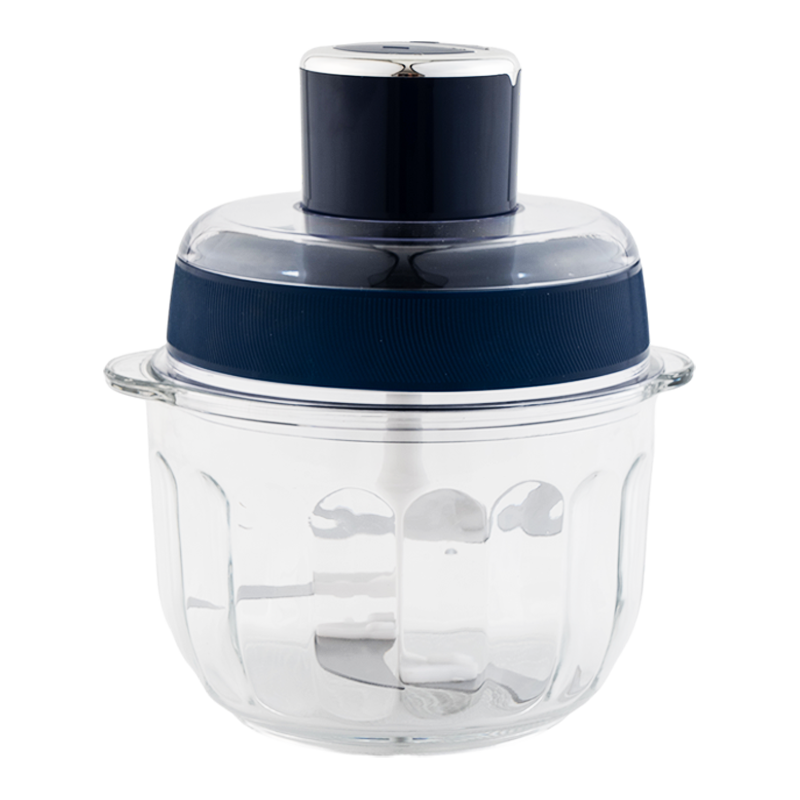
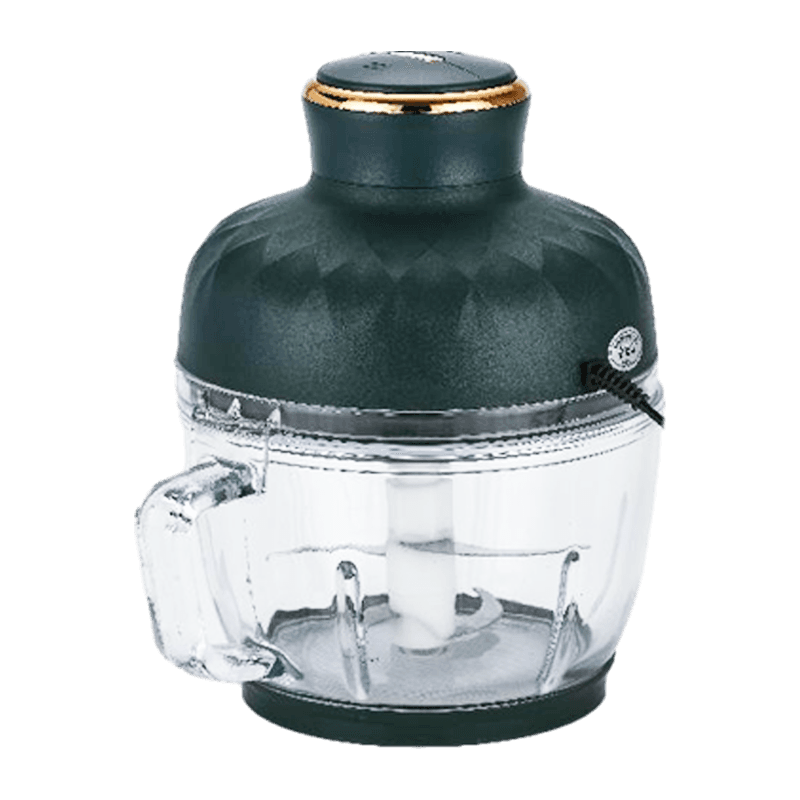
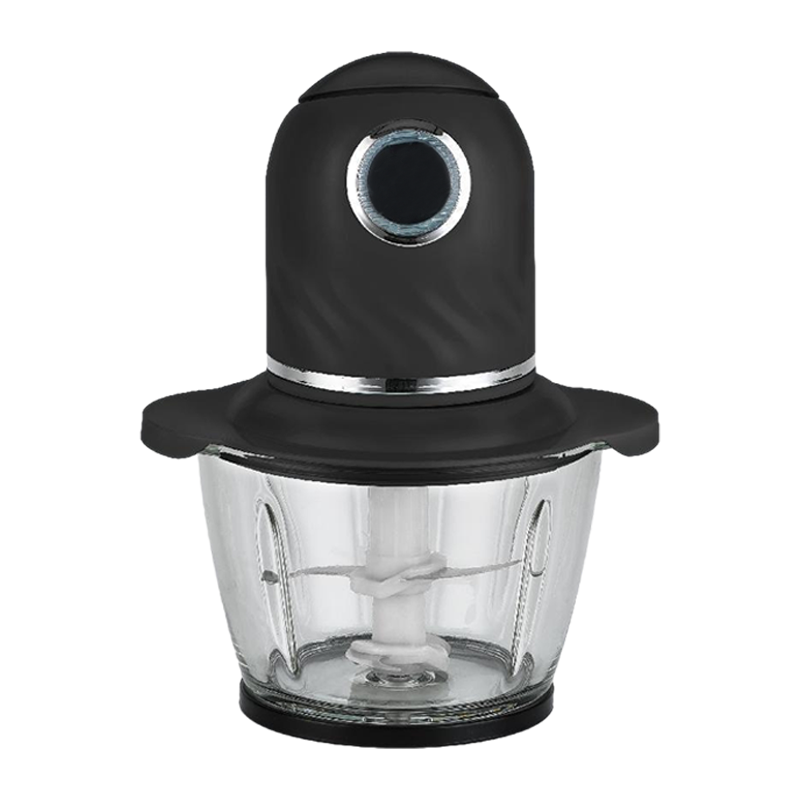
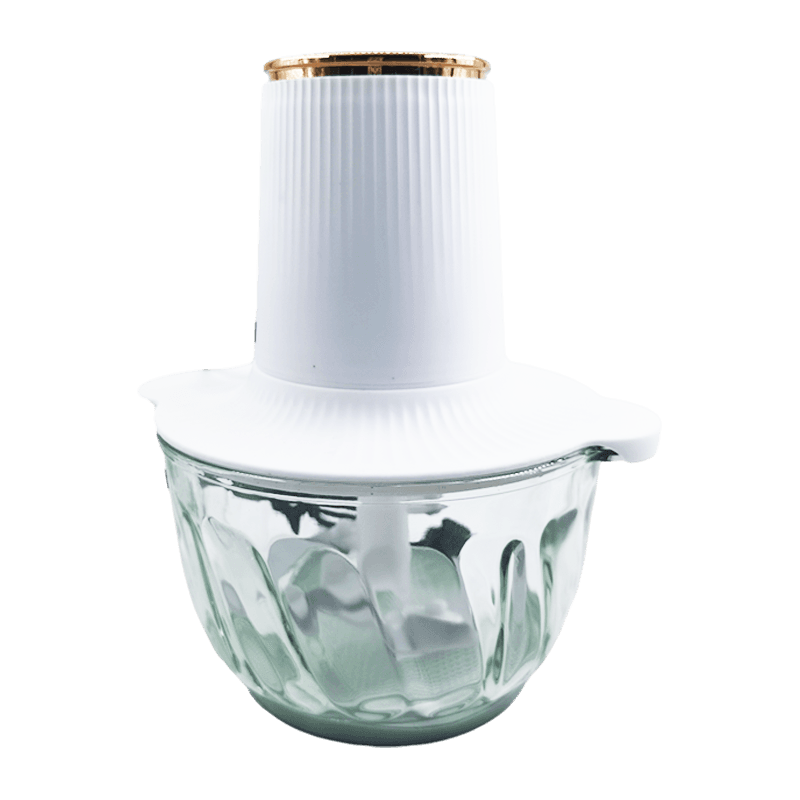
Currently, the market is primarily divided into two camps: Manual Food Chopper and Electric Food Chopper. Facing a plethora of choices, consumers often find themselves in a dilemma: Should they pursue the ultimate cost-effectiveness and portability of a Manual Food Chopper, or believe in the efficiency-first approach of an Electric Food Chopper? This article will provide an in-depth comparison to help you fully understand the pros and cons of these two product categories.
Why Has the Food Chopper Become a Modern Kitchen Essential?
Prep Pressure: How to Shorten Daily Chopping Time?
According to a survey on home cooking habits, over 60% of time spent in the kitchen is consumed by the "meal prep" stage. Specifically, when handling garlic, chili, onions, and nuts, manual chopping is not only inefficient but also accompanied by persistent odors on the hands and the tear-inducing irritation of spicy vapors.
The emergence of both the Manual Food Chopper and the Electric Food Chopper has completely transformed this reality. By utilizing high-speed rotating blades or mechanical lever structures, these tools achieve in seconds what would take several minutes by hand. Whether it is fine ginger mince or uniformly diced carrots, the chopper provides a high degree of standardization, significantly shortening prep time.
Healthy Eating Trends: The Rise of Homemade Sauces and Baby Food
As health consciousness grows, more families are rejecting store-bought pre-packaged seasonings that contain additives and preservatives. This requires a chopper that can not only mince but also achieve specific textures by controlling the frequency of operation.
Meanwhile, for families with infants, a chopper is a "must-have." While the Electric Food Chopper is perfect for creating smooth, liquid purees, the Manual Food Chopper is ideal for later stages where a bit of texture is needed, ensuring that babies receive fresh, natural, and easily digestible nutrition.
Manual Food Choppers: Ultimate Value and Outdoor Choice
Pull-Cord vs. Press-Type: Which Structure is More Labor-Saving?
Manual choppers rely primarily on mechanical structures to convert human power. The two most common structures on the market each have their own merits:
Pull-Cord (Pull Cord): The principle is similar to starting a lawnmower; by repeatedly pulling a high-strength nylon cord, it drives internal planetary gears or directly rotates the blade shaft. One pull usually equates to several rotations of the blades.
Pros: Exceptional Control and Precision. Since the chopping frequency is entirely determined by the number of pulls, users can achieve precise "grain-level" customization. For instance, if you want chunky onion pieces for a stir-fry, 3–5 pulls are sufficient; if you need a near-liquid mince, pull 15 times or more. It is ideal for handling small quantities, dry ingredients, or foods where texture is critical.
Cons: Physical Exertion and Component Lifespan. For individuals with less physical strength, the repetitive horizontal pulling motion can cause muscle fatigue in the arms and shoulders during long sessions. Furthermore, the nylon cord is a core consumable part; under long-term high-intensity tension or if the blade jams, there is a risk of fraying or snapping. Once the cord breaks, the head unit is usually irreparable.
Press-Type (Push Button/Manual Press): This drives the blades to rotate via a spring-loaded piston mechanism at the top.
Pros: Gravity-Assisted and Structurally Stable. Since the force is applied vertically downward, users can utilize part of their body weight to assist in pressing. This is more ergonomic and less tiring than horizontal pulling. Its internal structure is generally more robust than the pull-cord type, making it suitable for harder ingredients like potato chunks, nuts, or lean meat that require a burst of force to break down.
Cons: Cleaning Difficulty and Mechanical Dead Zones. Press-type structures often contain complex springs and piston chambers. If the seal design is poor, water can easily enter the internal mechanism during cleaning, leading to rusted springs or bacterial growth. Additionally, the noise from the spring rebounding can be louder than the pull-cord version, and the haptic feedback can feel somewhat stiff.
Why Do Travel and Camping Enthusiasts Prefer Manual Models?
With the global trend of Glamping (Glamorous Camping), the manual food chopper has become the secret weapon for "campsite chefs."
Complete Independence from Power, Use Anywhere: In deep mountains, by the sea, in remote wilderness, or any campsite without power supply, the mechanical advantage of the manual model is irreplaceable. You don't need to carry heavy power banks or search for outlets, nor do you worry about electrical failures due to unstable voltage or incompatible plugs. It is a true "off-grid" kitchen tool.
Extreme Silence, Preserving the Quiet Outdoors: Electric models often produce a loud, shrill whirring noise due to high-speed motor friction, which can easily disturb others in a quiet outdoor setting. In contrast, the manual model only makes the low-frequency sound of blades cutting through food and the shaft rotating, allowing you to prepare meals while remaining immersed in the sounds of nature.
Minimalist Maintenance for Harsh Environments: The construction is extremely simple, usually consisting only of a lid, a removable blade set, and a food-grade bowl. Without circuit boards, lithium batteries, or motors, it can be soaked and rinsed directly in a stream or a bucket of water without fear of short-circuiting. It’s ready to use again after a simple air-dry, greatly reducing maintenance costs.
Electric Food Choppers: Efficiency-First Bliss for the "Lazy"
Core Performance: Power and Blade Design
The logic of the electric model is simple: trade absolute physical power for time.
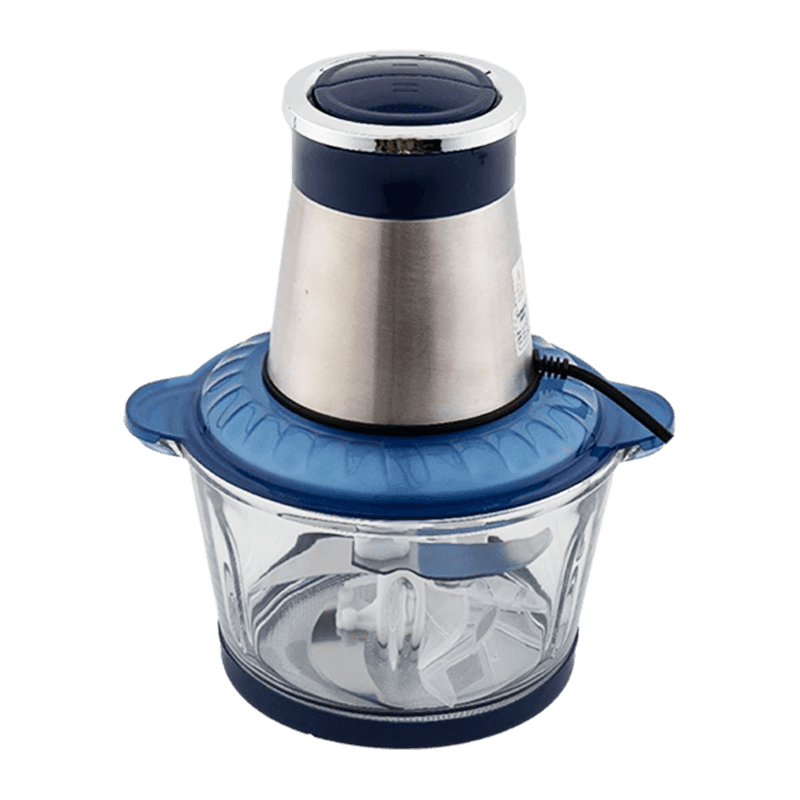
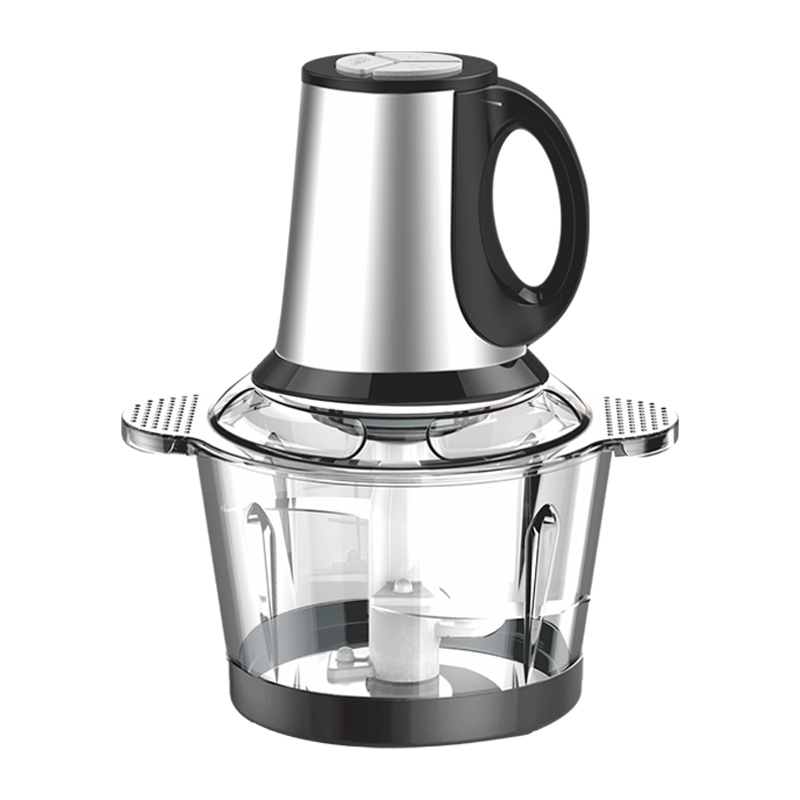
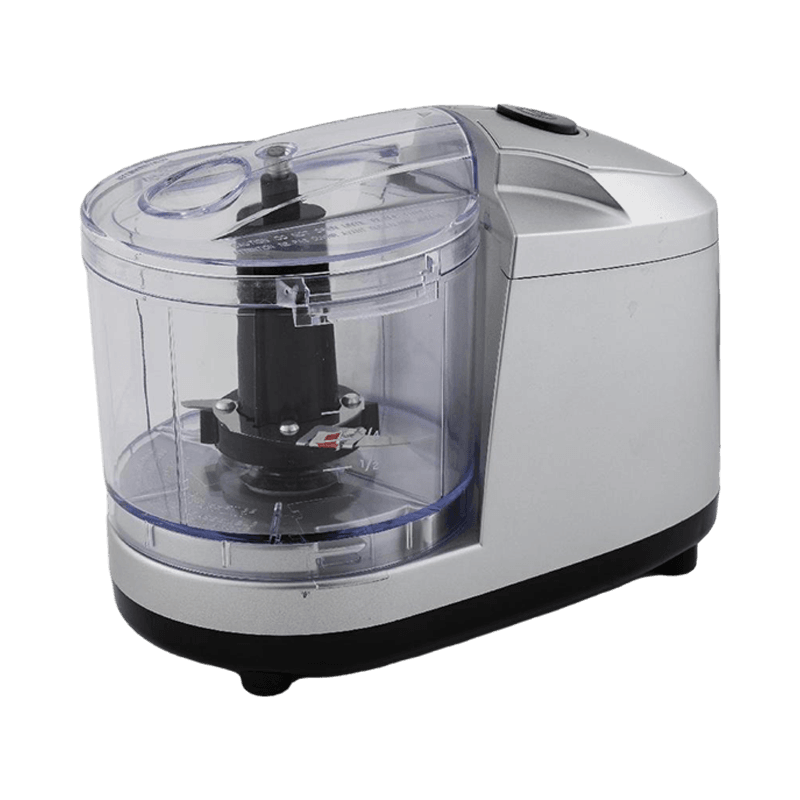
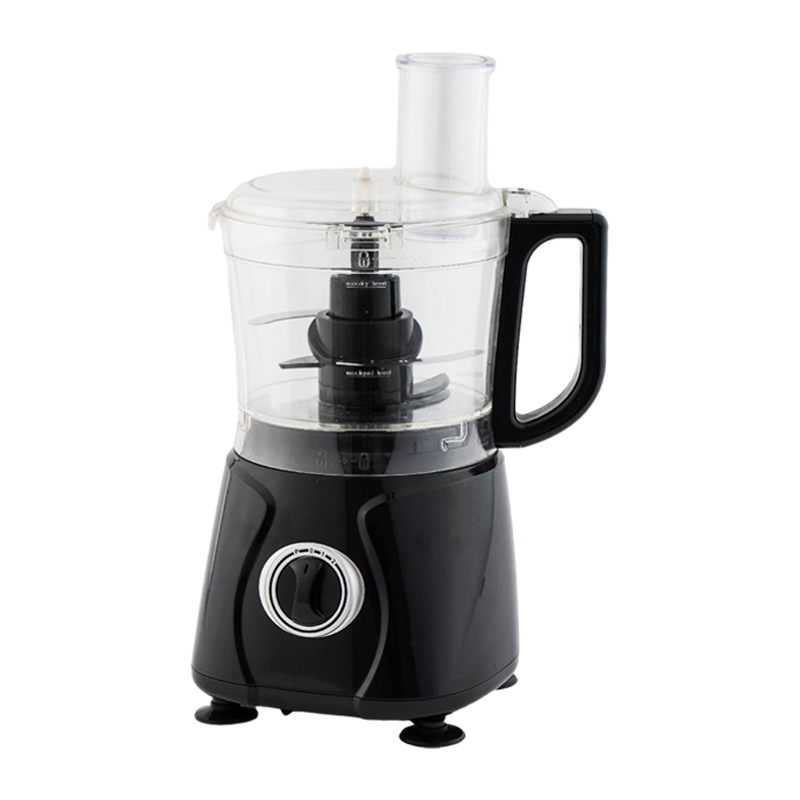
Power Selection Determines Versatility: Common electric models range from 200W to 500W. Entry-level 200W–300W products are suitable for soft vegetables, garlic, and dressings. High-power products of 500W and above often possess the capability of a "mini meat grinder," easily crushing ice, grinding hard nuts, and even handling sinewy pork, making them the power heart of a multi-functional kitchen.
Multi-Layer Blade Technology for Full Coverage: Efficient electric choppers often abandon single-layer blades for "S-shaped" double-layer or 3D four-leaf blade designs. This staggered arrangement uses high-speed rotation to create powerful internal vortices and pressure differences, ensuring that even the ingredients at the top of the bowl are constantly drawn into the bottom cutting zone. This fundamentally solves the manual model's occasional issue of "minced at the bottom, whole at the top."
Does "One-Touch" Operation Truly Free Your Hands?
The core selling point of the electric model is "Extreme Speed" and "Stability."
Overwhelming Capacity for Bulk Processing: When you need to prepare meat filling for a family’s worth of dumplings or a week’s worth of sofrito for meal prep, the repetitive physical exertion of a manual model is immense. An electric model completes the task with a single finger press, processing pounds of ingredients in minutes, greatly liberating you from labor-intensive prep work.
Sophisticated Safety Protection Mechanisms: Modern high-end electric choppers are commonly equipped with "triple safety lock" designs. For example, the power will only engage if the lid is fully locked and the motor head is correctly positioned via gravity sensors or magnetic induction. Additionally, built-in smart overheat protection chips will automatically cut power if the motor runs too long under heavy load, protecting the motor's lifespan and preventing fire risks.
Head-to-Head: Manual vs. Electric In-Depth Comparison
Texture Comparison: Which Produces More Uniform Purees?
In texture experiments, electric choppers—with constant high speeds of tens of thousands of RPMs—have an overwhelming advantage in producing "fully liquid purees" (such as tahini, extremely smooth baby fruit purees, or foie gras pâté). High-frequency physical impact allows oils and fibers to fully emulsify at a microscopic level, achieving a silky texture that cannot be replicated by hand.
The manual food chopper, on the other hand, acts more like a "high-efficiency cutting board replacement." It is exceptionally good at handling ingredients that need to retain their "soul"—that is, texture and fiber. Examples include the coarse chili flakes in Thai salads or the juicy tomato chunks in Mexican Salsa. If you pursue a texture that is "crushed but not mushy" with some level of structural regularity, the manual model is actually the more sophisticated choice.
Maintenance: Noise, Durability, and Ease of Cleaning
Extreme Differences in Noise Levels: This is a critical detail often ignored in the showroom. Electric models typically operate at 70–85 decibels, which can be quite intrusive in the quiet of early morning or nap time. Manual models operate almost silently, making them perfect for preparing baby food in a kitchen corner even while the infant is sleeping nearby.
Lifespan and Durability Assessment: Manual models win on mechanical simplicity; provided they aren't subjected to brute-force damage, they can often last five years or more, with the pull-cord being the only weak link. Electric models, while using mature motor technology, are sensitive to moisture and frequent start-stop cycles. Cordless rechargeable models, in particular, will see battery degradation over the years, leading to power loss or failure to start.
Cleaning Process and Hygiene: Most components of manual models are "Dishwasher Safe" on the top rack, achieving truly burden-free cleaning. However, the core of the electric model—the motor head—is a strict "no-water" zone. You must carefully wipe the surface with a damp cloth and manually clean the splash guard containing the circuitry, carrying a risk of short-circuiting if water enters.
Which Food Chopper Should You Buy?
Final Recommendations for Different User Groups
Before placing your order, carefully consider your kitchen habits and lifestyle:
Buy a Manual Chopper if you are:
A solo dweller seeking minimalist living: If you only mince two cloves of garlic per meal, cleaning the large bowl of an electric model takes longer than the task itself. The "use-it-and-wash-it" agility of the manual model fits your pace.
An outdoor enthusiast or camper: It is the only choice for off-grid environments and is lightweight yet durable.
A culinary traditionalist: You have a near-obsessive need for control over ingredient size and enjoy the "haptic feedback" of manual prep.
Buy an Electric Chopper if you are:
Part of a busy, large family: You handle meat and vegetables for many people daily and need an efficiency tool to win back precious rest time.
A parent of an infant: The high-frequency need for extremely fine purees makes the electric model an indispensable domestic assistant.
An "Efficiency Enthusiast": You don't want to waste a single extra second on repetitive mechanical cutting tasks.
A user with specific physical needs: For the elderly with arthritis or those with limited hand strength, the one-touch start of an electric model is much friendlier than pulling a cord.
Regardless of your choice, a food chopper is an investment in your kitchen happiness. It allows you to say goodbye to the boredom of chopping and leave more time for savoring delicious food and spending time with family.
 +86-18768503690