English
 Español
A coffee grinder is the single most important piece of equipment in a coffee preparation setup, more important than the espresso machine, the pour over kettle, or the brewing device, because the grind quality determines the fundamental chemistry of every cup of coffee brewed. Coffee extraction is a dissolution process in which water dissolves the soluble compounds from ground coffee particles, and the rate of that dissolution is governed almost entirely by the size and uniformity of the particles. A grinder that produces uniform, precise particles at the correct size for the intended brewing method will extract coffee with balance, sweetness, and clarity. A grinder that produces an uneven mixture of large and small particles, or that generates excessive heat from friction, or that allows static electricity to cause particles to clump, will undermine the quality of even the finest coffee beans regardless of how carefully the rest of the preparation process is executed.
The direct conclusion for anyone choosing a coffee grinder is this: for espresso, a burr grinder with stepless or very fine stepped adjustment and burrs sized 50 mm and above is required to achieve the precision needed; for filter coffee methods including pour over, Chemex, AeroPress, and batch brewing, a burr grinder with good grind uniformity at the medium to coarse end of the grind spectrum is the correct specification; and blade grinders, despite their low cost and wide availability, should be avoided for any quality coffee preparation because they produce a chaotic mixture of particle sizes that makes consistent extraction impossible regardless of how they are operated. This article covers grinder types, burr design, motor specifications, grind uniformity science, and practical selection guidance in full depth.
Burr Grinders vs Blade Grinders: The Foundational Choice
The fundamental design division in the coffee grinder market is between burr grinders and blade grinders. This is not a choice between equivalent approaches at different price points: it is a choice between a tool designed to produce controlled particle sizes and a tool that is fundamentally incapable of doing so.
How Blade Grinders Work and Why They Fail
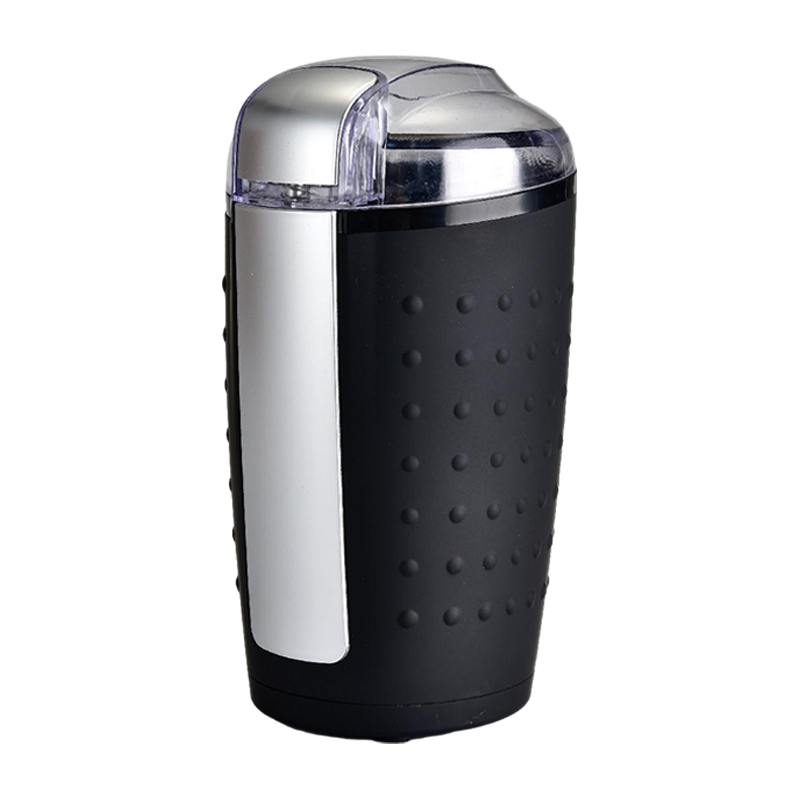
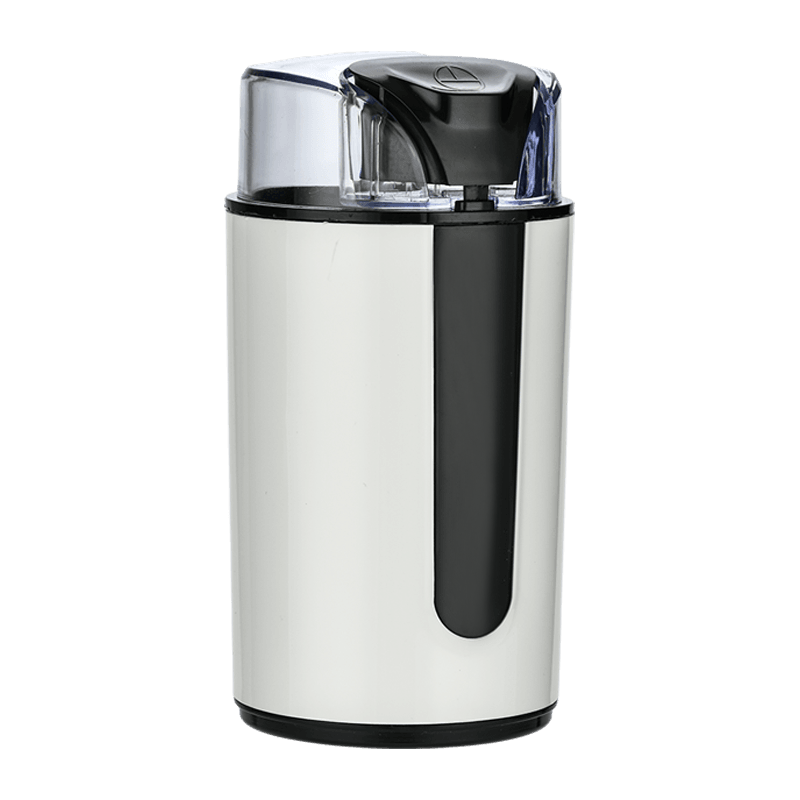
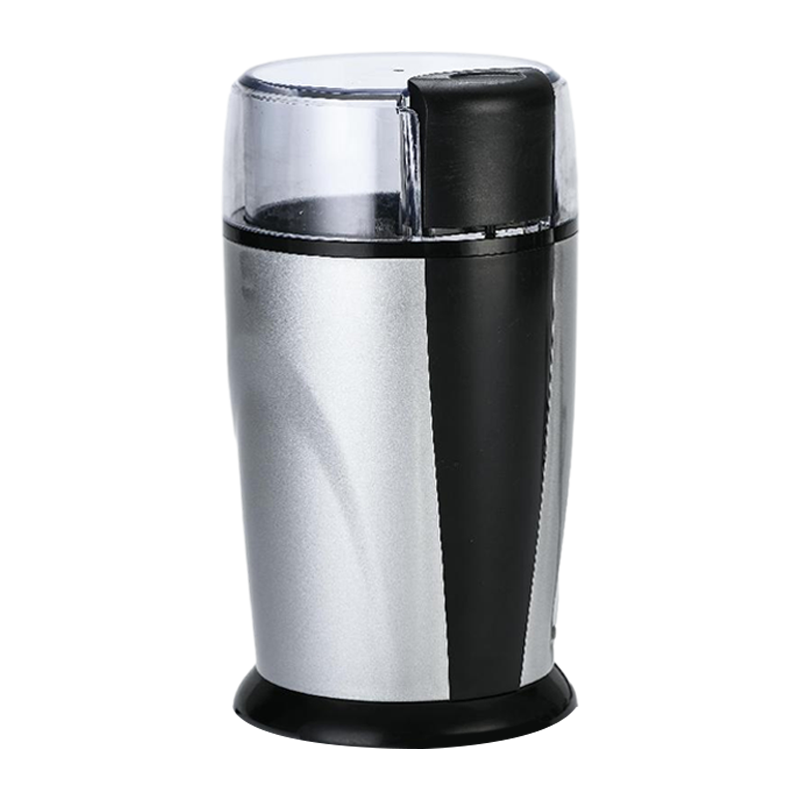
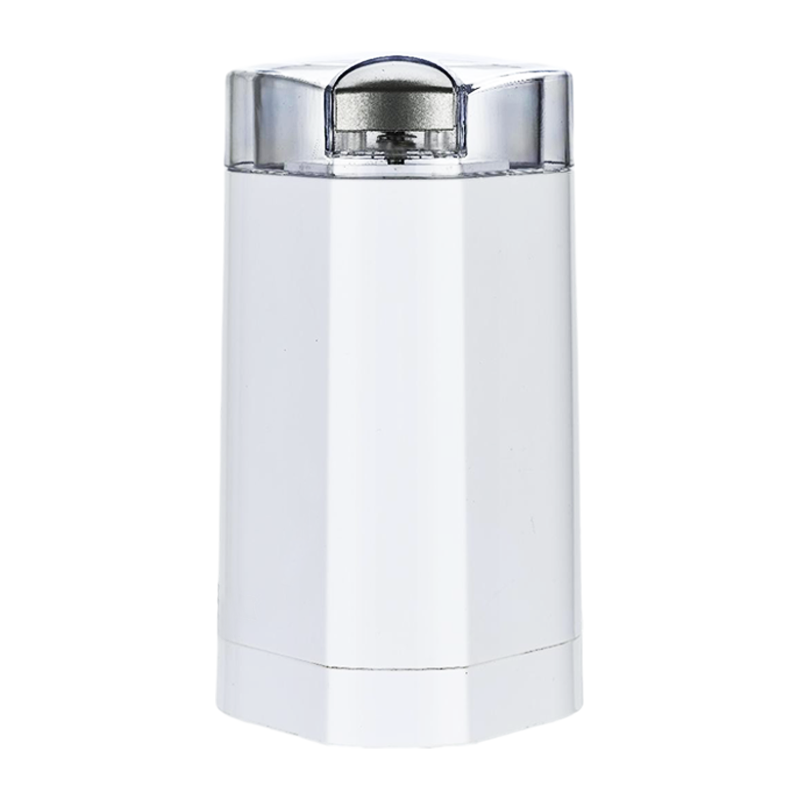
A blade grinder uses a rotating metal blade, similar in principle to a kitchen blender, to chop coffee beans into pieces by impact and cutting action. The user controls the grind by adjusting the grinding duration: a shorter run produces larger pieces, and a longer run produces smaller pieces. However, because the blade strikes beans randomly and the beans move around the grinding chamber unpredictably, each grinding session produces a wide and random distribution of particle sizes from fine powder to coarse chunks. Particle size distribution analysis of blade ground coffee shows a spread from below 100 micrometers to above 2,000 micrometers in a single grinding session, a range that is 5 to 10 times wider than the particle distribution from a quality burr grinder set to equivalent average grind size. The fine particles extract almost instantly and produce harsh, bitter compounds; the coarse particles extract slowly and produce sour, underdeveloped flavors; the result is a cup that combines both bitterness and sourness simultaneously, which is the defining sensory characteristic of poorly ground coffee.
How Burr Grinders Work and Why They Excel
A burr grinder passes coffee beans through a precisely controlled gap between two burrs (grinding surfaces) that are positioned at a fixed distance from each other. The beans are crushed and sheared as they pass through this gap, and the size of the gap determines the maximum size of particles that can exit the grinder. Because every particle must pass through the same gap, the resulting particle distribution is far more concentrated around a target size than blade grinding can achieve. Quality burr grinders produce particle size distributions in which 70 to 85 percent of the ground mass falls within a 200 micrometer range centered on the target grind size, compared to 30 to 50 percent for blade grinders, which is why burr ground coffee extracts more evenly, more predictably, and with greater flavor clarity than blade ground coffee at any equivalent grind setting.
The gap between the burrs is adjusted by the grind setting mechanism, which allows the user to dial in the precise particle size required for the specific brewing method in use. This adjustability is the enabling capability that makes burr grinders the correct tool for all quality coffee preparation across the full range of brewing methods from espresso to cold brew.
Flat Burrs vs Conical Burrs: Design Differences and Their Effect on Grind Quality
Within the burr grinder category, two distinct burr geometries dominate the market: flat burrs and conical burrs. Both achieve the fundamental objective of grinding coffee through a controlled gap, but their geometric arrangements produce different particle paths, different particle size distributions, and different sensory characteristics in the resulting cup.
Flat Burr Grinders: Precision and Intensity
Flat burr grinders use two horizontal disc shaped burrs, one stationary and one rotating, positioned face to face in a horizontal plane. Coffee beans fall from above into the center of the burr set, travel outward under centrifugal force as they are ground through the gap between the two disc faces, and exit at the outer edge of the burr set. The horizontal arrangement and the consistent distance between the parallel burr faces throughout the grinding zone produce a very narrow particle size distribution, meaning more of the ground coffee falls within a tight size range and fewer particles are significantly larger or smaller than the target size.
Flat burr grinders are the standard equipment in professional espresso environments and in high end specialty coffee shops worldwide because their narrow particle distribution produces espresso shots with greater sweetness, clarity, and flavor intensity than conical burr grinders at equivalent settings. The grinding geometry of flat burrs also produces a slightly more bimodal distribution (with a small secondary peak of fine particles called fines) than conical burrs, and this concentration of fines contributes to the textural body and perceived strength of espresso that coffee professionals and experienced espresso drinkers associate with the flat burr sound profile.
Conical Burr Grinders: Versatility and Retention Reduction
Conical burr grinders use a cone shaped inner burr rotating inside a ring shaped outer burr, with coffee entering at the top and exiting at the bottom through the annular gap between the cone and the ring. The conical geometry means the beans travel downward through the grinder under gravity as well as centrifugal force, which produces a longer grinding path and a somewhat broader particle distribution than flat burrs at comparable settings.
Conical burr grinders have two practical advantages over flat burr designs. First, the vertical geometry and gravity assisted particle exit produce lower retention (the amount of coffee that stays in the grinder body between uses) than flat burr designs, which matters for home users switching between different coffees or for single dose espresso preparation where every gram of coffee must be accounted for precisely. Premium conical burr grinders achieve retention figures below 0.3 grams per grinding session, compared to 1 to 3 grams for many flat burr grinders of similar market position, which is a significant practical advantage when grinding single dose quantities of 18 to 22 grams for espresso. Second, the conical geometry typically operates at lower rotational speed than flat burr grinders for equivalent throughput, which reduces heat generation during grinding and is associated with less thermal degradation of volatile aromatic compounds in the coffee.
Burr Size and Its Effect on Performance
Burr diameter is a critical specification for both flat and conical burr grinders because larger burrs grind coffee with less friction and heat generation per unit of throughput, and larger burr surfaces allow more grinding contact area per revolution, which produces more even particle size distributions. For espresso grinders, the coffee industry generally treats 64 mm flat burrs as the minimum for high quality work, with 83 mm and 98 mm flat burr grinders representing the professional benchmark for consistent, high volume espresso preparation. For conical burr grinders, 40 mm conical burrs are the entry level specification for quality home espresso, with 60 to 80 mm conical burrs found in prosumer and commercial equipment.
Grind Settings, Adjustment Mechanisms, and Repeatability
The precision and repeatability of a coffee grinder's adjustment mechanism is as important as the quality of its burrs, because a grinder that cannot reliably return to the same grind setting across multiple sessions forces the user to re dial and waste coffee every time the grinder is used for a different brewing method or a different coffee.
Stepped vs Stepless Grind Adjustment
Stepped grinders have discrete grind settings defined by a click mechanism that positions the burrs at one of a fixed number of pre determined intervals. The number of steps between the finest and coarsest settings varies from 10 to 40 steps in consumer equipment, with more steps providing finer resolution between adjacent settings. Stepped grinders are easy to use and return reliably to a saved setting by clicking to the numbered or labeled position, which makes them practical for users who regularly switch between multiple brewing methods or coffees with different optimal grind sizes.
Stepless grinders allow the burr gap to be adjusted infinitely without discrete click positions, providing theoretically unlimited grind resolution. For espresso, where the correct grind setting can change by as little as a quarter turn on a stepless adjustment ring and where the ideal grind point for a given coffee can fall between two adjacent steps on a stepped grinder, stepless adjustment provides a meaningful performance advantage by allowing the grind to be dialed in to the exact optimum without being constrained to the nearest available step. The trade off is that returning to a specific setting requires more care and attention than clicking to a numbered position on a stepped grinder.
Single Dose vs Hopper Feed Operation
Traditional coffee grinder design assumes that coffee beans are loaded into a hopper and dispensed on demand, keeping a reserve of beans above the burrs at all times. This approach suits commercial and high volume home use but has the disadvantages of exposing beans to air in the hopper (which accelerates staling), making it difficult to switch between different coffees without extensive purging, and creating relatively high retention because the grinder must always maintain a full coffee path from hopper to burrs to output chute.
Single dose operation has become increasingly popular in the specialty coffee community, particularly for home espresso users who want to experiment with different coffees and roast levels without committing to large hoppers of a single coffee. Single dose grinders are designed with minimal retention, often below 0.5 grams, and the user loads only the quantity of beans needed for a single brewing session into the grinding chamber, which is then fully ground and ejected before the next dose is loaded.
Motor Types, RPM, and Their Effect on Coffee Quality
The motor in a coffee grinder determines how fast the burrs rotate, how much torque is available to grind through dense beans, how much heat is generated during grinding, and how long the grinder can operate continuously before thermal management becomes necessary. These factors collectively affect both the practical usability of the grinder and the quality of the ground coffee it produces.
Direct Drive vs Gear Reduction Motors
Consumer and prosumer coffee grinders primarily use one of two motor configurations: direct drive motors, where the burr is mounted directly on the motor shaft and rotates at the motor's operating speed, and gear reduction (or belt drive) systems, where the motor spins faster than the burr and a mechanical reduction stage (gears or a belt and pulley system) steps down the rotational speed to a lower burr RPM. Each configuration has advantages and trade offs that affect the grinder's performance characteristics.
Direct drive configurations with AC motors in commercial equipment operate the burrs at 1,400 to 1,600 RPM (for 50 Hz electrical supply) or 1,700 to 1,900 RPM (for 60 Hz electrical supply). These speeds are well matched to the throughput capacity of professional sized flat burrs (64 mm and above) and produce adequate grinding force without excessive heat generation when the thermal mass of the large burr set is taken into account.
Gear reduction and belt drive motor configurations in specialized home espresso and filter grinders operate the burrs at 300 to 500 RPM, which is 3 to 5 times slower than direct drive commercial equipment. At these low speeds, the mechanical work of grinding is performed with less friction induced heat transfer to the coffee, which preserves more of the volatile aromatic compounds responsible for the floral, fruity, and delicate flavor characteristics of light roasted specialty coffee. This is why low RPM grinders are considered the benchmark for filter coffee preparation in the specialty coffee community, despite their higher cost relative to their throughput rate.
Heat Generation and Its Impact on Extraction
Heat generated during grinding accelerates the evaporation of volatile aromatic compounds from the freshly ground coffee before it can be extracted, reducing the aromatic intensity and flavor complexity of the resulting cup. The effect is measurable: coffee ground at burr temperatures above 40 degrees Celsius shows statistically significant reductions in measured volatile compound concentrations compared to coffee ground at ambient temperature on a thermally controlled grinder. For this reason, professional espresso operations during periods of high demand use cooling fans, thermally insulated burr sets, or periodic grinding pauses to prevent burr temperature from rising to the point where flavor degradation becomes detectable by trained tasters.
Coffee Grinder Specifications by Brewing Method
Different brewing methods require fundamentally different grind sizes and different levels of grind precision to extract coffee at optimal quality. The correct coffee grinder for espresso is not necessarily the correct grinder for pour over or French press, and understanding these differences is essential for selecting the right grinder for a specific brewing setup.
| Brewing Method | Target Particle Size (micrometers) | Precision Requirement | Recommended Grinder Type | Minimum Burr Specification |
|---|---|---|---|---|
| Espresso | 200 to 400 | Very high: 50 micrometer precision needed | Flat or conical burr, stepless adjustment | 54 mm flat burr or 40 mm conical burr |
| Moka pot | 300 to 600 | High | Flat or conical burr | 40 mm conical or 50 mm flat burr |
| AeroPress | 400 to 900 (method dependent) | Medium to high | Conical or flat burr | 38 mm conical or entry flat burr |
| Pour over (V60, Chemex) | 600 to 900 | High: uniformity is critical for filter clarity | Flat or conical burr, low RPM preferred | 40 mm conical or 60 mm flat burr |
| French press | 900 to 1,200 | Medium: coarse grind tolerates some variation | Conical burr | 38 mm conical burr minimum |
| Cold brew | 1,000 to 1,500 | Low: long steep time compensates for variation | Any burr grinder | Any quality burr grinder |
Manual vs Electric Coffee Grinders: When Each Is the Right Choice
The choice between manual (hand cranked) and electric coffee grinders is not simply a matter of convenience vs effort: there are specific brewing contexts and user situations where a manual grinder is genuinely the superior tool despite the physical effort it requires.
Manual Grinders: Quality at Low Cost and High Portability
Manual coffee grinders use a hand crank to rotate the inner burr against the fixed outer burr, with the user providing the grinding energy through physical effort. The absence of a motor eliminates motor noise, heat generation from the motor, and the cost of the motor and its electronic controls, allowing quality burrs to be offered at a significantly lower total product price than equivalent burr quality in an electric grinder. Manual grinders from specialist manufacturers such as Commandante, Kinu, and 1Zpresso achieve grind uniformity comparable to electric flat burr grinders costing 3 to 5 times more, making manual grinding the most cost efficient path to high quality burr grinding for users who are willing to invest 30 to 60 seconds of effort per dose.
Manual grinders are also the practical choice for travel and camping use, where the absence of electrical power requirements and the compact, robust construction of quality manual grinders make them the only practical option for grinding coffee away from mains electricity.
Electric Grinders: Speed, Consistency, and Higher Volume Capability
Electric coffee grinders are the practical choice for daily home use where grinding 2 to 6 doses per day would make manual cranking an inconvenient routine, for commercial settings where hundreds of doses per day are required, and for espresso preparation where the grind must be delivered consistently at speed to maintain service pace. The consistency of electric grinding across multiple doses, with exactly the same mechanical grinding conditions applied to every dose in a grinding session, also provides an advantage over manual grinding in environments where dose to dose consistency is critical.
Grind Uniformity, Fines, and Their Effect on Extraction Quality
Understanding the relationship between grind uniformity, fine particle content, and extraction quality is the most technically important knowledge for any coffee practitioner seeking to maximize the quality of their coffee preparation. This is an area where the science of coffee extraction directly informs the choice and use of coffee grinder equipment.
All burr grinders produce two populations of ground particles: the main grind distribution centered around the target particle size, and a secondary population of very fine particles (fines) generated by the cutting edges of the burrs as they fracture coffee cell walls. These fines, typically below 100 micrometers in size, extract much more rapidly than the main grind particles and can contribute bitter, astringent compounds to the cup if they are present in excess quantities or if the extraction time is longer than optimal for their size.
Research by the Specialty Coffee Association and independent coffee research groups has shown that the fines content of burr ground coffee typically ranges from 8 to 25 percent of the total ground mass depending on burr geometry, burr sharpness, and grind setting. New burrs produce less fines than worn burrs because sharper cutting edges fracture the coffee cell structure more cleanly, and finer grind settings produce proportionally more fines than coarser settings because more of the total grinding work is done at the burr edges rather than in the gaps. This is why experienced espresso professionals replace their grinder burrs after 500 to 1,000 kg of coffee throughput to maintain consistent extraction quality, and why dialing in a newly burred grinder requires a re optimization of the espresso recipe compared to the settings that worked with the previous burr set.
Managing Static and Clumping in Ground Coffee
Static electricity is an underappreciated factor in coffee grinder performance, particularly in dry indoor environments and with light roasted coffees that have lower moisture content than dark roasted coffees. Freshly ground coffee particles carry electrostatic charges generated by the friction of grinding, and these charges cause particles to repel each other (creating a cloud of coffee dust that spreads across the counter) or to attract the plastic and metal surfaces of the grinder chute and output container (causing uneven deposit and collection of ground coffee). Both effects reduce the precision of dose measurement and create a less consistent extraction environment.
The Ross Droplet Technique (RDT) of adding a small amount of water (typically 0.5 to 1.0 mL) to the coffee beans before grinding is widely used in the specialty coffee community to reduce static charge buildup during grinding. The moisture increases the electrical conductivity of the bean surface sufficiently to prevent charge accumulation without adding enough water to affect the coffee's flavor profile when brewed. Users who practice the Ross Droplet Technique report a 70 to 90 percent reduction in grinder static behavior compared to dry grinding, making it a highly effective and cost free intervention for the static problem that affects many electric burr grinders.
Selecting a Coffee Grinder: A Practical Decision Framework
The coffee grinder market spans a price range from under $30 for basic blade grinders to above $3,000 for professional flat burr espresso grinders, and navigating this range requires a clear framework that matches grinder capability to the user's actual brewing needs, budget, and usage frequency.
- Define the primary brewing method. A grinder optimized for espresso (requiring fine grind precision and stepless or very fine stepped adjustment) is a different product from a grinder optimized for filter coffee (requiring excellent uniformity at coarser settings and wide range between fine and coarse). Some grinders perform both functions well; many are specialized for one or the other. If espresso is the primary brewing method, prioritize grinders with stepless adjustment and burrs above 50 mm. If filter coffee is the focus, prioritize grind uniformity at medium to coarse settings and low RPM operation for aromatic preservation.
- Assess the usage volume and convenience requirements. For daily use of 2 to 4 doses, any quality burr grinder will be adequate from a mechanical durability standpoint. For higher volume daily use (more than 6 doses per day or any commercial use), select a grinder with a motor rated for continuous duty cycles and with burrs sized for the throughput volume. For occasional use or travel, a quality manual grinder is a cost effective and highly capable alternative to a budget electric grinder.
- Set a realistic budget and buy the best burrs available within it. In the coffee grinder market, the relationship between price and grind quality is strongest in the burr specification: higher priced grinders at any given market level consistently use better burr materials (hardened steel vs standard steel vs ceramic), larger burr diameters, and more precisely engineered burr geometries than lower priced alternatives. Spending more on the grinder and less on the brewing equipment generally produces a greater improvement in cup quality than the reverse allocation because the grinder affects every brew, while the brewing equipment affects the extraction process.
- Consider maintenance requirements and long term cost of ownership. All burr grinders require periodic burr replacement to maintain grind quality as the burr edges wear. The cost and availability of replacement burrs for the specific model, and the ease of the replacement procedure, are practical considerations that affect the total cost of owning a grinder over its service life. Models from established brands with good parts distribution and clear user replacement procedures have significantly lower long term cost of ownership than equivalent quality grinders from niche manufacturers with poor parts availability.
The coffee grinder is the investment that pays dividends in every cup of coffee brewed. A quality burr grinder, correctly matched to the primary brewing method, operated at the right settings, and maintained with appropriate burr replacement at the manufacturer's recommended interval, will produce consistently high quality ground coffee that elevates every brewing session far beyond what any blade grinder or low quality burr device is capable of delivering. The knowledge contained in this article provides the technical and practical foundation for making this investment correctly, whether the starting budget is $100 for a quality manual grinder or $1,500 for a home espresso flat burr setup.
Cleaning and Maintaining a Coffee Grinder for Consistent Performance
Regular cleaning and maintenance of a coffee grinder is as important to consistent grind quality as the initial grinder selection. Ground coffee contains oils that accumulate on burr surfaces and in the grinding chamber over time, becoming rancid and transferring stale flavors to freshly ground coffee. Coffee bean chaff (the dried skin of the coffee bean) also accumulates in the grinder body and output chute, and if not removed it contributes papery, astringent notes to the cup.
- Weekly cleaning of the grinding chamber and output chute: Use a stiff cleaning brush (most quality grinders are supplied with one) to remove accumulated coffee grounds and chaff from the grinding chamber, the burr surfaces, and the output chute. Do not use water inside the grinding chamber or on the burrs unless the specific grinder model is designed for wet cleaning: the moisture will cause the steel burrs to oxidize and will damage wooden and composite grinding chamber components.
- Monthly deep cleaning with grinder cleaning pellets: Grinder cleaning products such as Grindz, composed of compressed starch pellets, are run through the grinder at a normal grind setting to absorb and remove the rancid coffee oils that accumulate on burr surfaces between brush cleanings. Follow the manufacturer's dosage and purging instructions, as the pellets must be fully purged by running a small quantity of sacrificial coffee beans through the grinder before the grinder is returned to regular use. This cleaning approach is suitable for most electric burr grinders and should be performed monthly for home espresso use and weekly for higher volume filter coffee applications.
- Annual burr inspection and replacement assessment: Inspect the burr edges annually for visible signs of wear: dulled or rounded cutting edges, chips or nicks in the burr surface, or a gradual increase in the proportion of fines in the grind output at a constant grind setting are all indicators that burr replacement is warranted. Most home espresso grinders are specified by manufacturers for burr replacement after 300 to 500 kg of coffee throughput, which for a home user grinding 20 grams per day corresponds to approximately 4 to 7 years between replacements, making burr replacement a modest but important element of the total cost of ownership calculation for any quality burr grinder.
A coffee grinder that is cleaned regularly, maintained with timely burr replacement, and operated within its designed throughput parameters will deliver consistent, high quality grinding performance throughout its service life, which for quality burr grinders from reputable manufacturers typically exceeds ten years with appropriate care. The relationship between grinder maintenance discipline and cup quality is direct and measurable, and the small time investment in regular cleaning pays consistent dividends in the clarity, sweetness, and balance of every cup brewed.
 +86-18768503690